

Renewable Resources
On cultivating what nourishes in lean times

So much of any year is flammable.
- “Burning the Old Year,” Naomi Shihab Nye
If you could burrow through the bark of a deciduous tree in winter, and if you could see at the microscopic level, you would see a series of judicious, energy-saving decisions at play. In the wake of an ice or snowstorm (like the one many of us are currently gearing up for or weathering), a tree will begin moving water from inside the cells into the space between them. This allows the water to freeze—and thus expand—without destroying the cells’ walls and function.
A tree will also sometimes dehydrate itself, intentionally, so as to minimize the amount of water and thus the risk of damage as it expands into ice.
This entire process has a singular aim: to preserve and maintain optimal nourishment, even in the harshest conditions, so the tree might grow and bloom in spring and summer.
My word for 2026 is a bit of a cringy one: cultivate. This word had a major moment at the height of the hipster era, say, in 2015? Cafés and Bible studies and online gatherings were cultivating all sorts of qualities and aesthetics. It felt grassroots, intentional, and excessively earnest.
The truth is, I didn’t set out looking for this word. But it’s risen to the surface over the past several weeks. It’s become clear that the world is too much with me1, and it’s high time I reclaim some agency over what feeds me and what I devote my scarce energy to.
It’s no surprise to you, I assume, that I could spend my entire waking hours, from the moment I open my eyes to the moment I close them, consuming information, news, and entertainment of varying pertinence to my real, embodied life. I can consume, binge, entertain, listen, learn, all in the name of being informed, or keeping up on the text thread, or having the appropriate level of cultural fluency at this exact moment.
The result, in gardening language, is that the soil of my mind is littered with detritus and all manner of debris. There is some good humus down there, but it’s suffocating under the weight of cast-off materials bearing no real nutrients. It’s time to let the metaphorical chaff of my life and attention burn away. When resources are scarce and the climate turns cold and harsh, I want nourishment I can draw upon, and practices in place that help me build resilience.
That means it’s time to be judicious about what comes in, so that I can be thoughtful about what goes out, like the trees. Surprisingly, it was a review of my reading list from last year that first brought this dynamic to my attention.
2025 was my most prolific reading year yet, rounding out at 44 books total. This is a literal pittance in comparison to my most voracious reader-friends, who regularly read upwards of 100 books each year… but it was a lot of books for me, given my work and childcare schedule.
Can I be honest about the whole book tracking/reading challenge movement? I’m actually not all that interested in the total number of books I read (or anyone reads) in a given year. I’m far more concerned with quality. (And right about now is when my husband would tell me I sound pretentious).
I read Frankenstein for the first time this year, and I re-read Pride and Prejudice for the first time since high school. I also read plenty of topical nonfiction, palate-cleansing rom coms, and buzzy, of-the-moment fiction. I do like having the variety, and I crave a lighthearted, easy read after a heavier read.
But I will say this about reading the classics: reading the words of the greats is nothing short of intellectually nourishing. When I slip back into the syntax of an earlier era, spending time amidst the worlds and ideas that have stood the test of time, I am better for it. And I don’t just mean in my reading life. Reading Frankenstein earlier this year lent me an invaluable philosophical lens on AI usage, the ethics of ambition, and what our moral duty is in the face of unwieldy, unchecked technological possibility. Just because we can, Mary Shelley asserts, doesn’t mean we should.
The classics are heralded as such for a reason. We know this. But it has been a sheer delight to actually, personally see how these books have, like a hidden wellspring, fed and nourished my thinking life, my family life, the way I live and think and work and love. It’s much the same as attending a challenging workout class or eating a hearty salad after days of fast food. It takes a little more self-discipline up front, but the feeling afterward is of undeniable nourishment.
As I began to think about and hone my reading list for this year, I’ve felt the itch to conduct a similar assessment in every area of my life, where possible. I want to consume good, nourishing, beautiful things. Wild, unpredictable, startling things. To create a pool of resources upon which I can draw in lean and mean times, like, oh, I don’t know, the ones we’re living through here in America at this exact moment.
In short, I don’t want to find myself having spent hours poring over texts between a billionaire pop star and her A-list bestie (a completely random, irrelevant example, with no relation to real events), just because I can.
So, in that vein, I’m sharing an inexhaustive list of renewable resources. These are things that replenish themselves or have a nourishing effect; things with which I want to cultivate good soil in my soul.
An inexhaustive list of renewable resources (or resources with outsized returns):
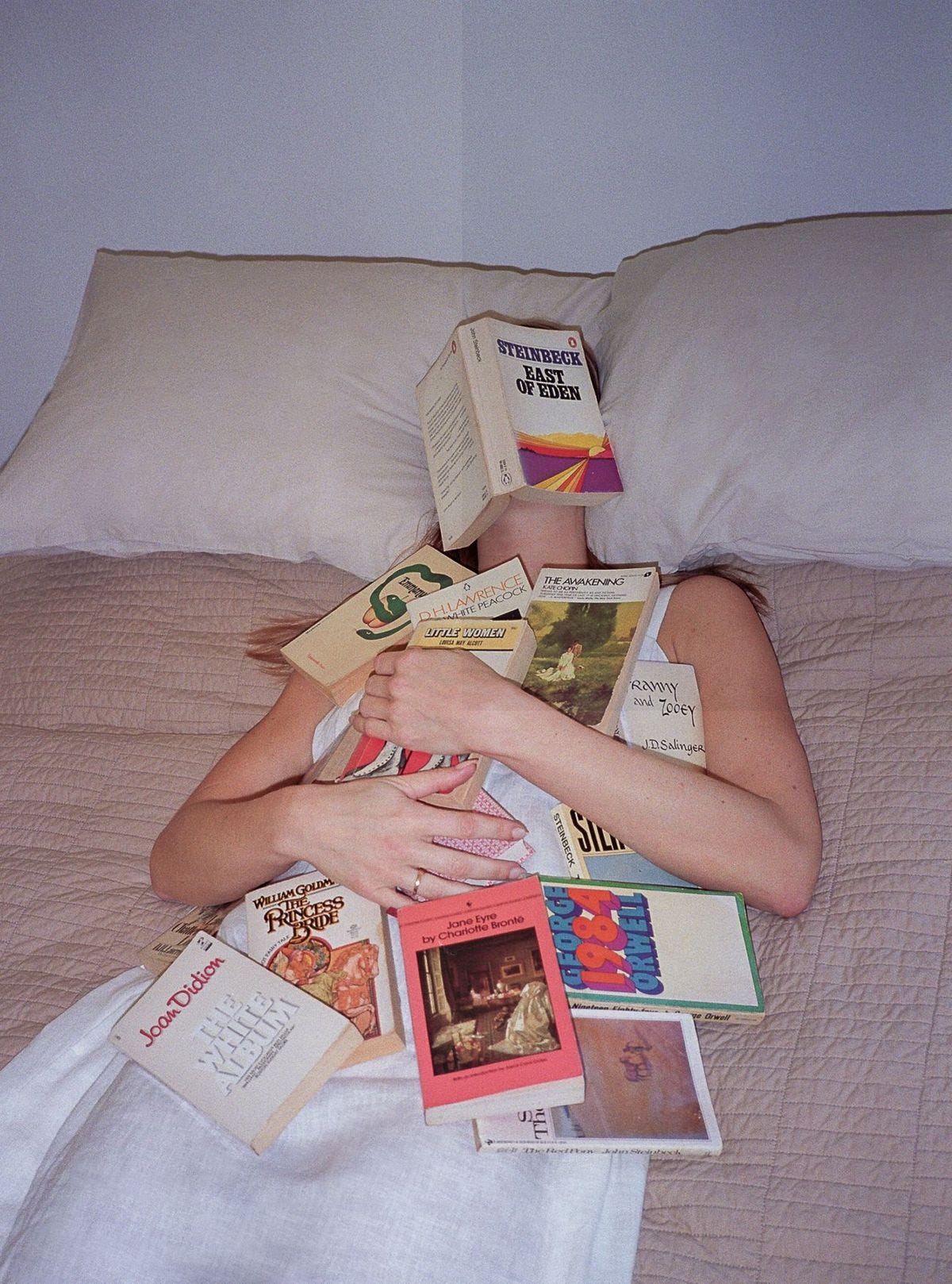
Good books. We could literally read for the rest of our lives and never reach the end of them! This gives me great delight and also great sorrow, at the thought of all the books I’ll never read.
Sunlight. For yourself, or your garden, or your pets, or your house plants.
Solidarity, activism, and empathy. These have an exponential and galvanizing effect, especially now.
Community. This is an investment with remarkable returns. Put in a little work to build it, and you’ll find yourself reaping connection, friendship, resources, and meaning.
Art. Even if you can’t afford museum admission, there is art everywhere. On social media, online, in murals somewhere in your city, and in your children’s creations. PLUS, so many museums make portions of their exhibits public online.
Attention. You can’t technically get it back, but the more you give, the more you increase your own capacity for wonder and delight.
Snuggles. Find yourself a human or animal and feel the goodness.
Creativity. There is, in actuality, no bottom to your own wells of creative energy. If you’re feeling tapped out (as I do regularly), see the good books or art bulletpoints, and you’ll be stuck in a lovely art/creation/art/creation loop.
Resourcefulness. There is already enough stuff to go around. For the most part, if none of us ever purchased anything new, ever again, we’d still have enough. Repairing, mending, and buying re-used give me a distinct sense of satisfaction.
Now, I genuinely want to know—what’s on your list of renewable resources? What wellsprings do you draw from when times get tough? What reserves are you drawing on now?
Cultivating beauty like it’s 2015,
Hallie
P.S. If you support the humane treatment of people, please, CALL YOUR REPRESENTATIVES and urge them to require ICE to follow the Fourth Amendment and to refrain from using force, coercion, or violence. It’s not much, but it is one thing we can do.
So good! More I want to say but yes up through Jan 30 we can call senators for this issue - sounds like house already decided?
Finding major resonance in your reflections, as usual! I agree that quality matters over quantity, but I want to acknowledge that 44 books is a wonderful accomplishment for anyone, let alone a working mama. I think I tracked a “mere” 15 for 2025, but am exponentially richer for it.
Also, my heart dropped into my stomach when I read this: “We could literally read for the rest of our lives and never reach the end of them! This gives me great delight and also great sorrow, at the thought of all the books I’ll never read.” 🥺